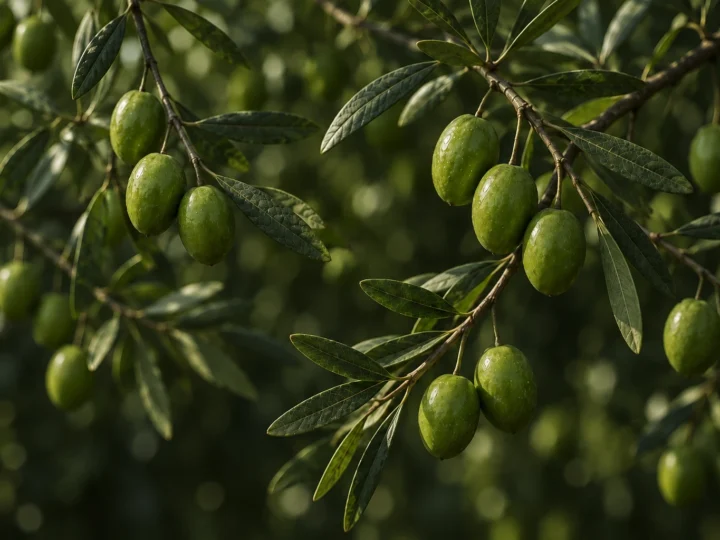
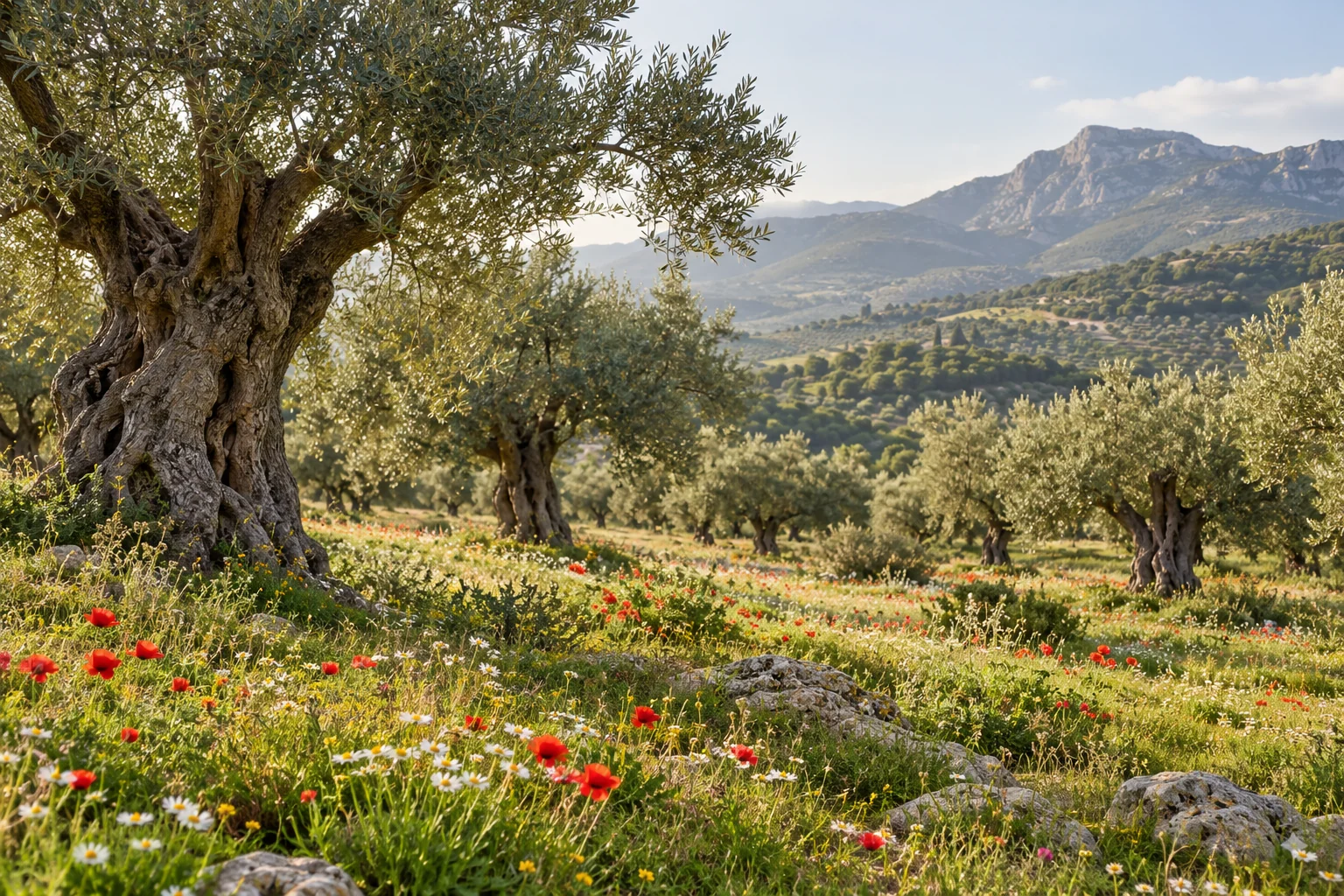
Before the bottle, before the mill and even before the olive, there is the olive grove. A tree that can live for centuries, a landscape that defines half of Spain and an ecosystem that, well cared for, fills with life. Every great extra virgin olive oil begins here.
In short
- An olive grove is a plantation of olive trees (Olea europaea) grown for their fruit.
- Spain is the world’s largest olive oil producer, with more than 2.5 million hectares of olive groves.
- Organic groves do without synthetic pesticides and fertilisers and work with ground cover and biodiversity.
- Decisions in the field, such as variety, pruning and harvest timing, shape much of the oil’s quality.
What is an olive grove?
An olive grove is land planted with olive trees to harvest their fruit, the olive, which is pressed into oil or prepared as table olives. The term covers anything from a small family plot with a few dozen trees to the vast expanses that blanket the hills of Jaén, Córdoba or Toledo. In Spain the olive grove is much more than a crop: it is landscape, culture and the economic backbone of thousands of villages.
A tree made to last
The olive is an evergreen tree with leaves silvered underneath, perfectly adapted to dry Mediterranean summers and poor soils. Its roots search deep for water and its wood regenerates easily, which is why there are olive trees several centuries old that still bear fruit. Spain has monumental specimens in the Maestrat, Mallorca and Andalusia, true living monuments.
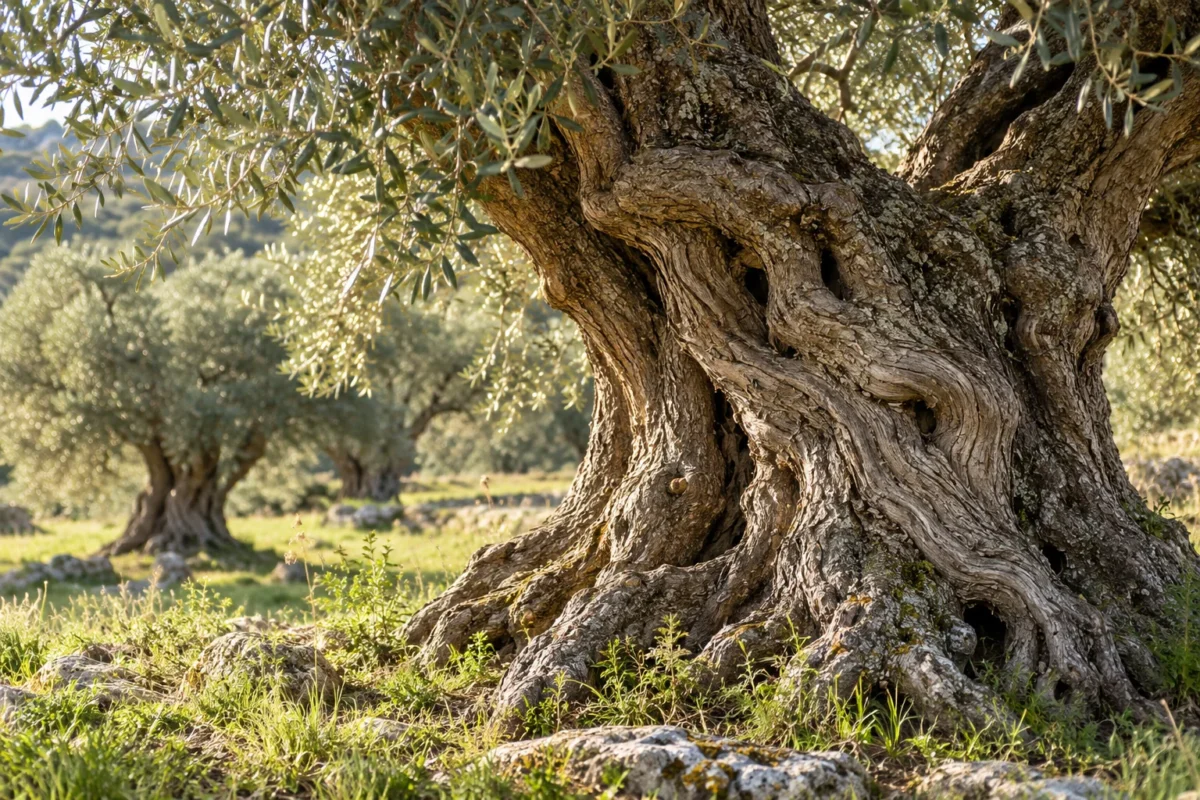
There are hundreds of olive varieties. Spain alone grows more than two hundred commercially, although a handful dominate the landscape: Picual, Hojiblanca, Cornicabra, Arbequina, Manzanilla Cacereña and Empeltre, among others.
The olive grove’s year
Every oil is the result of a year’s work. Broadly, this is how the seasons unfold in a grove in southern Spain:
- WinterThe tree rests after the harvest. It is time for pruning and looking after the ground cover.
- SpringBudding and flowering, in April and May. The ground cover is managed and pests are monitored.
- SummerThe fruit sets and the stone hardens. Where there is irrigation, it is used only as support.
- AutumnOil builds up in the flesh and veraison arrives. Harvesting begins, between October and November.
Veraison, when the olive turns from green to violet, is key. Picking earlier gives greener, more intense oils rich in polyphenols; waiting gives higher yields and milder oils. We explain it in depth in what early harvest olive oil is.
Traditional, intensive and hedgerow
Not all olive groves are alike. Broadly, there are three models:
Under 200 trees/ha
Traditional grove
Widely spaced trees, often centuries old and rain-fed, on hillsides. The classic landscape of Jaén, Córdoba and Toledo, with high environmental and cultural value.
200 to 600 trees/ha
Intensive grove
More trees per hectare and usually irrigation. Harvesting can be mechanised.
Over 1,000 trees/ha
Hedgerow grove
Continuous rows picked by straddle harvesters, mainly with compact varieties such as Arbequina or Arbosana.
In all three
Quality lies in the care
Picking sound olives from the tree at the right moment, and milling them as soon as possible.
The organic olive grove: living soil and biodiversity
A certified organic olive grove uses no herbicides, insecticides or synthetic chemical fertilisers. Instead, it relies on practices that aim for a balanced system:
Living soil
- Ground cover between the rows, which slows erosion and holds water.
- Organic fertiliser: compost, manure or shredded prunings.
Biodiversity
- Biological pest control with hedges, field margins and nest boxes for birds and useful insects.
- Mowing after flowering, leaving food for pollinators.
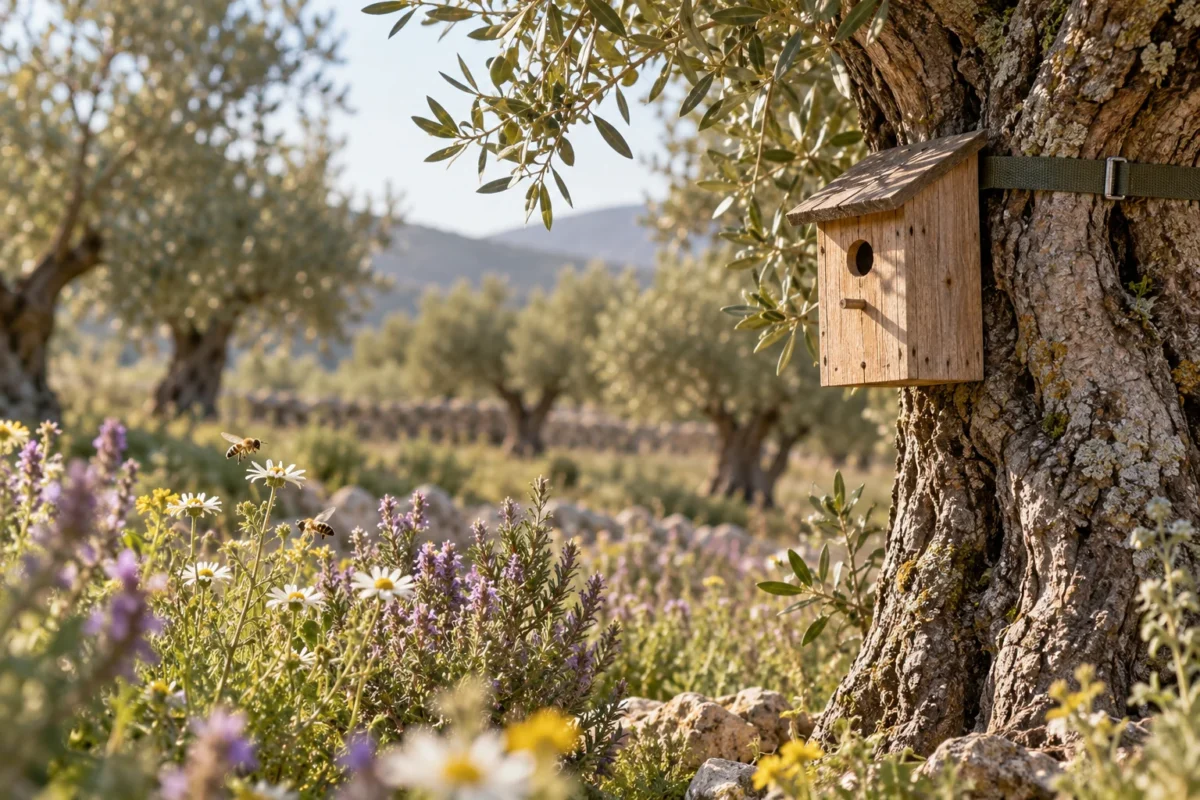
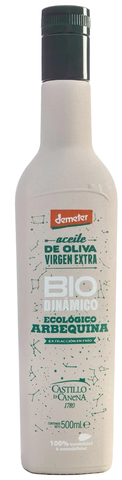
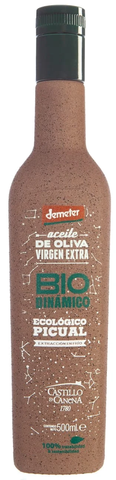
Initiatives such as Olivares Vivos, led by SEO/BirdLife and the University of Jaén, have shown that restoring biodiversity in olive groves is compatible with profitability and can even improve it. Some producers in our shop, such as Castillo de Canena, take part in this project and in biodynamic farming.
If you want to know how all this is certified, we explain it in what certified organic olive oil means.
An olive grove full of flowers, birds and insects is not neglected: it is alive.
From grove to mill
The quality built over a year in the field can be lost in hours. That is why the best producers pick only olives from the tree, carry them in clean crates or trailers and mill them the same day. The result is an oil that keeps the aromas of the grove intact: grass, leaf, tomato plant, almond. The landscape, quite literally, bottled. To discover those aromas, continue with our guide on how to taste olive oil.
We describe how olives are harvested, step by step, in the olive harvest, on our sister shop Aceite Oliva Online.
Olive grove FAQ
What is an olive grove?
Land planted with olive trees to harvest olives, which are made into olive oil or prepared as table olives.
How long does an olive tree live?
Many centuries. Its wood regenerates from the base, and Spain has monumental olive trees still producing after hundreds of years.
What is the difference between an organic and a conventional olive grove?
A certified organic grove uses no herbicides, insecticides or synthetic chemical fertilisers, and relies on ground cover, organic fertiliser and biological pest control.
How many olive trees are there per hectare?
It depends on the model: under 200 in a traditional grove, 200 to 600 in an intensive one and over 1,000 in a hedgerow grove.
When are olives harvested?
Usually between October and January. The early harvest, with olives still green, gives the most intense oils.