
What extra virgin olive oil is
Extra virgin olive oil is the juice of the olive, obtained solely by mechanical means, without refining or blending with other oils. To be labelled «extra virgin», EU rules require a maximum free acidity of 0.8 % and a tasting panel that finds no defects and does detect the fruitiness of the olive.
«Organic» is something else, on top of that: it does not refer to the oil's grade, but to how the olive grove was farmed and how the product was made and inspected.
What «organic» means
In the European Union, the terms «organic», «ecological» and «biological» (and the abbreviations «eco» and «bio») are protected and can only be used on products that comply with Regulation (EU) 2018/848 on organic production. Its basic principles are:
- No synthetic chemical pesticides, herbicides or fertilisers are used. Only certain authorised substances of natural origin are allowed, under strict conditions.
- No genetically modified organisms are used.
- Soil fertility is maintained with organic matter, such as compost or shredded pruning remains.
- Biodiversity and the natural balance of the grove are encouraged to keep pests and diseases in check.
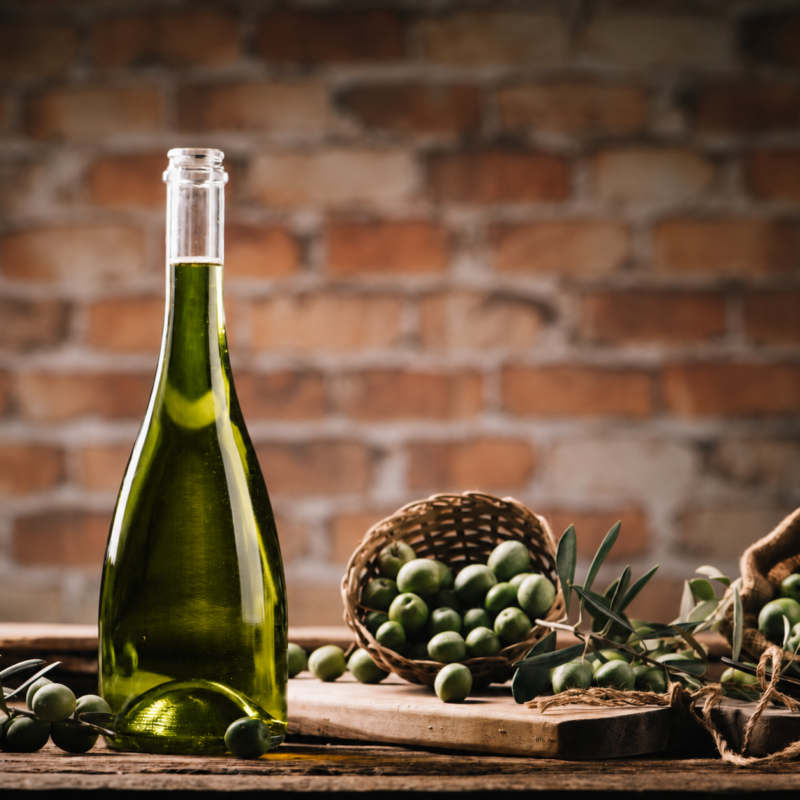
How an organic olive grove is farmed
An organic olive grove works with nature rather than against it:
- Living soil. The soil is an ecosystem full of microorganisms, earthworms and fungi that feed the tree. It is protected from excessive tilling and enriched with organic matter.
- Cover crops. The grasses and flowers growing between the trees protect the soil from erosion, hold moisture and shelter beneficial insects.
- Biodiversity. Hedges, nests and shelters for birds and helpful wildlife keep pests under control naturally.
- Careful management. Pruning, irrigation and harvesting are planned to keep the tree in balance and the fruit at its best.
Certification and inspection
A product cannot be sold as organic on the producer's say-so. Every operator (farmer, mill, bottler) must be registered in the control system and inspected at least once a year by an authorised control body. In Spain, each autonomous community designates the competent authority, which may be a regional organic farming council or committee or an authorised private control body.
A grove that switches from conventional to organic farming first goes through a conversion period, which for perennial crops such as the olive tree is usually three years.
How to recognise an organic olive oil
- The EU organic logo (the «Euro-leaf») on the packaging.
- The code of the control body, in a format such as «ES-ECO-…», next to the logo.
- The indication of the origin of the agricultural raw materials (for example, «EU Agriculture»).
Our range is made up of certified organic oils and products. Even so, we encourage you to check these details on the label when your order arrives.
Organic, biodynamic and other labels
Biodynamic farming starts from organic farming and adds its own approach: it treats the farm as a living organism and uses specific preparations and calendars for sowing and fieldwork. Its certification is private (such as Demeter) and comes on top of the official organic certification. Some of our oils carry it.
Be careful with terms such as «natural», «traditional» or «untreated»: they are not the same as «organic», they are not subject to equivalent official control and they do not guarantee compliance with the regulation.
Olive oil and health: what can be said
Being organic does not make an oil «healthier», nor does it «cure» anything: the certification is about how it is produced, not about health effects. What we can repeat is the claim EU law authorises for olive oil:
Olive oil polyphenols contribute to the protection of blood lipids from oxidative stress.
This claim may only be used for oils that contain at least 5 mg of hydroxytyrosol and its derivatives (for example, the oleuropein complex and tyrosol) per 20 g of olive oil, and the benefit is obtained with a daily intake of 20 g. Not every oil meets it: it depends on the variety, the harvest time and the production, and it must be stated in the product information.
How to taste an olive oil
Tasting olive oil is simple and quick to learn:
- Warm it. Pour a little into a small glass, cover it with your hand and warm it for a few seconds between your palms.
- Smell it. Uncover it and breathe in slowly. Look for aromas of freshly cut grass, tomato leaf, almond, apple or artichoke.
- Taste it. Take a small sip, spread the oil around your mouth and draw in a little air to bring out its nuances.
- Judge three attributes: fruitiness (the aroma of the olive), bitterness (on the tongue) and pungency (in the throat). A little bitterness or a peppery kick is not a defect: it is a sign of a fresh oil with character.
Each variety has its own personality. Picual is usually intense, with marked bitterness and pungency; Arbequina is mild and sweet, with notes of ripe fruit and almond; Hojiblanca is balanced; Cornicabra is fruity and full of character. There are many more, such as Arbosana, Manzanilla Cacereña, Royal or Morisca, and every harvest changes the nuances.
How to store it
Olive oil has three enemies: light, heat and air.
- Keep it somewhere cool and dark, away from hobs, ovens and windows. Opaque or dark glass bottles protect it from light.
- Keep the bottle tightly closed when you are not using it, to limit contact with air.
- Large tins can be decanted into a small, clean bottle for everyday use, so the rest stays protected.
- Once opened, try to use it within a few months to enjoy its full aroma. Respect the best-before date on the pack.
- There is no need to keep it in the fridge: if it gets very cold it may solidify or turn cloudy, which is harmless and disappears at room temperature.
Frequently asked questions
Are «organic», «ecological» and «bio» the same thing?
Yes. In the European Union they are equivalent, protected terms: they can only be used on products certified under Regulation (EU) 2018/848.
Why does organic olive oil usually cost more?
Because organic farming usually means more work and a lower yield per tree, plus the cost of inspection and certification. The price also depends on the variety, the harvest and the size of the producer.
Can I cook and fry with extra virgin olive oil?
Yes. Extra virgin olive oil is stable when heated and is suitable for cooking, frying and dressing. If you want to enjoy all its nuances, keep it for using raw.
What is the sediment at the bottom of the bottle?
It is natural olive residue, especially common in unfiltered or freshly made oils. It is not a defect; you can leave it in the bottle or pour carefully.
How do I know an oil is really organic?
Look for the EU organic logo and the code of the control body on the packaging. If they are missing, it cannot be sold as organic.
How long does olive oil keep once opened?
Ideally, use it within a few months. Keep it closed, in a cool, dark place, so it keeps its aroma and flavour.