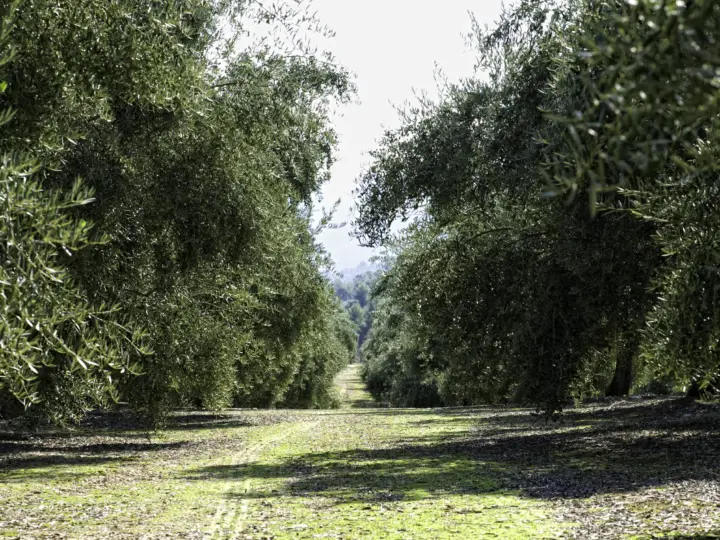
In the European Union, “organic”, “ecological” and “bio” mean the same thing, and they are not words anyone can put on a label. Behind them there is a regulation, annual inspections and a logo that says a great deal about how the olive grove was farmed. This is what a certified organic olive oil guarantees.
In short
- In the EU, the terms organic, ecological and biological (bio, eco) are protected by law and may only be used with certification.
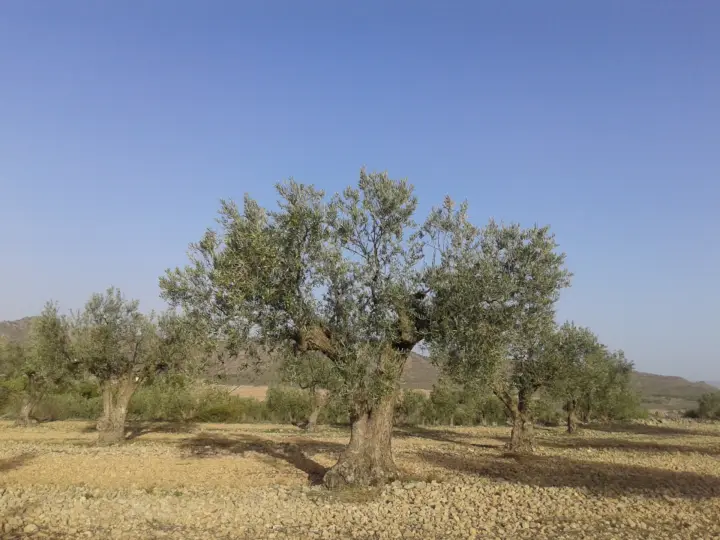
- Organic olive groves use no synthetic herbicides, pesticides or fertilisers, and no genetically modified organisms.
- Every producer is inspected at least once a year by a control body.
- The label must carry the EU organic logo, the control body code and the place where the raw material was farmed.
What the rules require
Organic production in Europe is governed by Regulation (EU) 2018/848, in force since 2022. In the olive grove, its principles translate into concrete practices:
- No synthetic chemicals: synthetic herbicides, insecticides and fungicides are not allowed. Only certain authorised substances of natural or mineral origin are permitted.
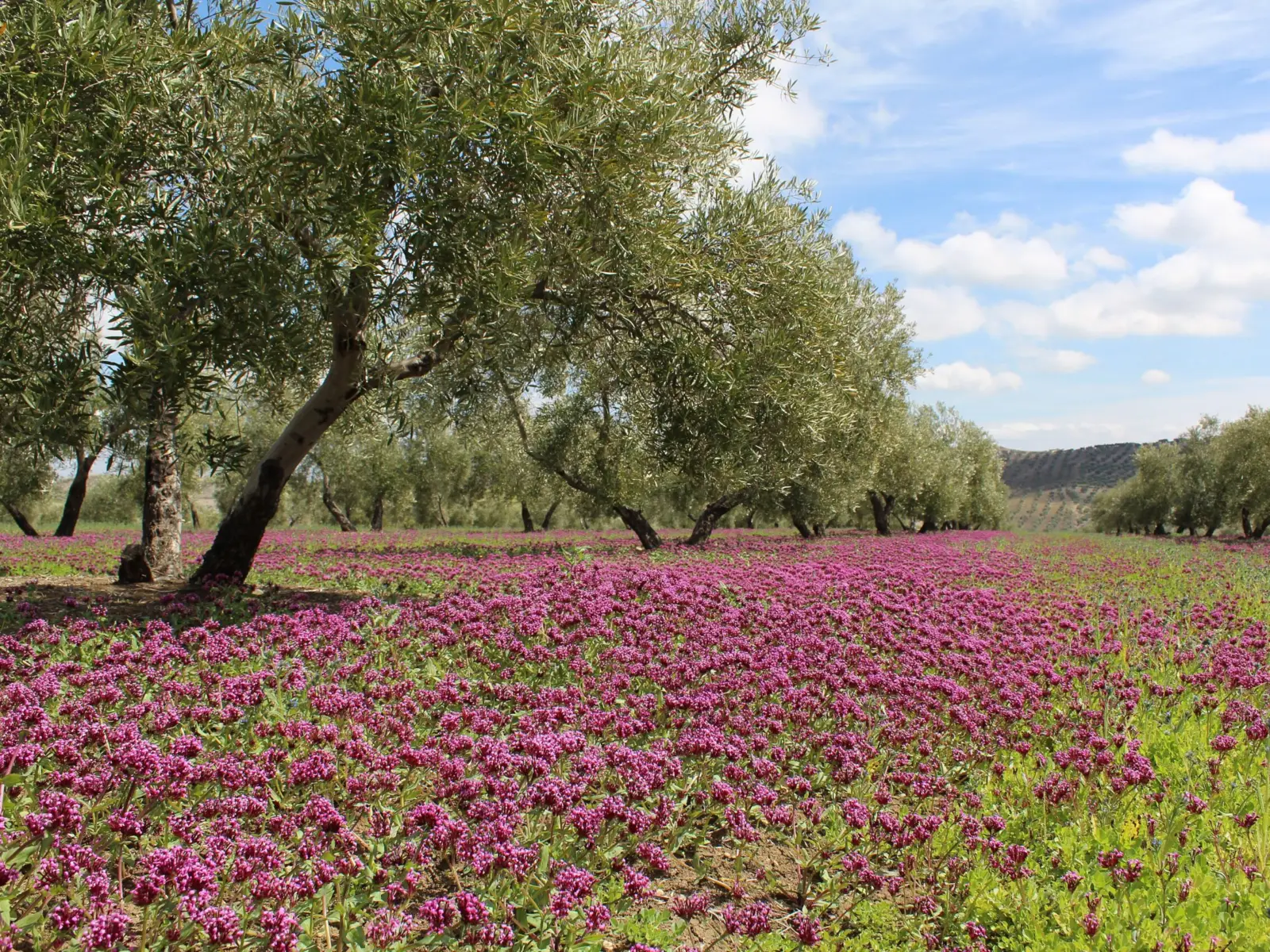
- Organic fertilisation: compost, manure, pruning residues, green manures and cover crops that maintain soil fertility.
- Biological pest control, with traps, beneficial wildlife and habitat management.
- No genetically modified organisms.
- Full traceability from grove to bottle, including the mill and the bottling plant.
From conventional to organic: conversion
An olive grove does not become organic overnight. For permanent crops such as olives, the rules require a three-year conversion period before harvest, during which all the rules already apply but the oil cannot yet be sold as organic. It is the time the soil and the ecosystem need to adapt.
How to read an organic olive oil label
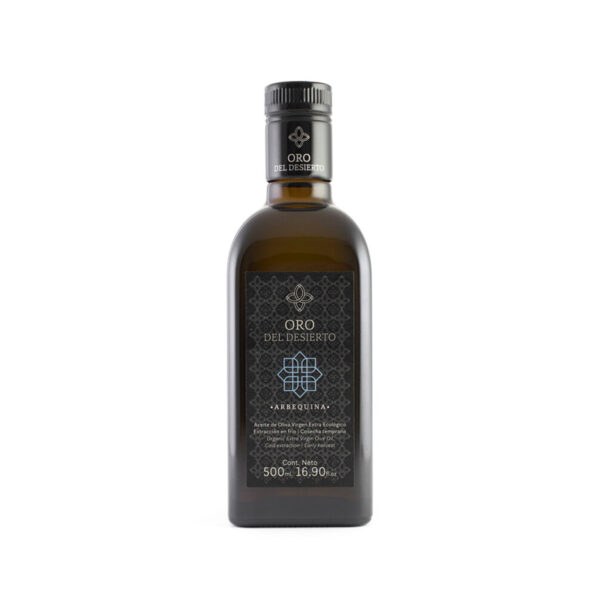
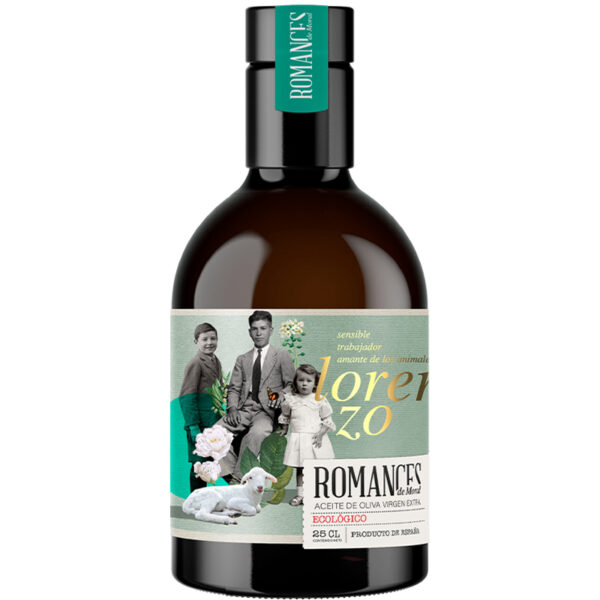
Every organic oil packed in the European Union must show:
- The EU organic logo, the “Euro-leaf”: a leaf made of white stars on a green background.
- The control body code, in the format ES-ECO-000-XX in Spain, which identifies the body that certified the operator.
- Where the raw material was farmed: “EU Agriculture”, “non-EU Agriculture” or the name of the country, such as “Agriculture Spain”.
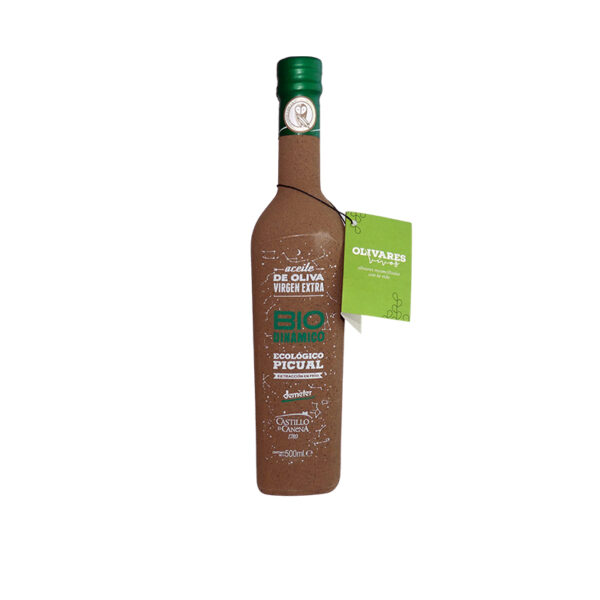
Many producers also include the logo of their regional certification body and, for biodynamic oils, the Demeter label.
Does organic olive oil taste different?
Organic certification refers to how the olives are grown, not to the category of the oil. An organic oil can be extra virgin, virgin or even a lower category, and it must pass the same analyses and the same tasting. That is why it is worth looking for both at once: extra virgin and organic.
That said, many organic olive groves are traditional, rain-fed and in the mountains, with smaller yields and very careful work. It is no coincidence that many of the oils winning international competitions are organic.
Beyond the label: biodiversity and biodynamics
Some producers go a step beyond the legal minimum:
- Biodynamic farming: it starts from organic farming and adds natural preparations and its own farming calendar. It is certified with the Demeter label.
- Olivares Vivos: a model promoted by SEO/BirdLife and the University of Jaén to restore biodiversity in olive groves with cover crops, hedgerows, ponds and nest boxes, with its own label.
We tell you more about this way of farming in the organic olive grove.
Why we only sell organic olive oil
At Aceite de Oliva de España we have decided to work only with certified organic extra virgin olive oils. We believe a great oil starts in living soil, and that buying organic is the most direct way to support the producers who look after the olive grove, its wildlife and its landscape.