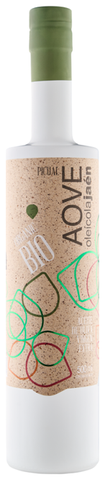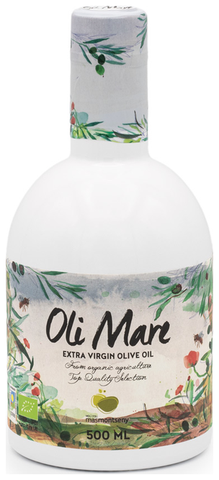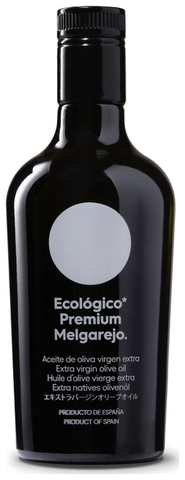

Standing in front of the shelf, the question is common: what really changes between an organic and a conventional extra virgin olive oil? Both can be excellent, and both meet the same quality standard. The difference comes before the mill: in how the grove is farmed and how the whole process is inspected.
In short
- Organic and conventional are two legal ways of producing extra virgin olive oil.
- Organic groves use no synthetic pesticides, herbicides or fertilisers.
- Every organic operator is inspected at least once a year and carries the EU organic logo.
- The «extra virgin» grade (acidity, tasting) is measured the same way in both cases.
What is the same: the extra virgin grade
«Extra virgin» is a quality grade, not a farming method. To earn it, any oil, organic or not, must be olive juice obtained by mechanical means only, have a free acidity of 0.8 % or less, and pass a tasting in which the panel finds no defects and does detect fruitiness. So an organic oil is not «more extra virgin» than another: it meets the same standard.
What changes: how the grove is farmed
The difference is in the field. An organic grove follows Regulation (EU) 2018/848, which means:
- Organic fertilisation: compost, manure, shredded prunings and cover crops instead of synthetic fertilisers.
- Pest control without synthetic chemicals: traps, beneficial insects, hedges and only certain authorised natural substances.
- Covered soil: grass between the trees is mown rather than killed with herbicides, which protects the soil from erosion.
- Conversion period: a conventional grove usually needs three years of organic management before its oil can be sold as organic.
Conventional farming may use authorised synthetic products within legal limits. Both are regulated; they simply follow different rules.
What changes: inspection and the label
«Organic», «biological» and «ecological» (and «bio», «eco») are protected terms. Only operators registered in the control system who pass yearly inspections of the grove, the mill and the bottling can use them. On the label you will see the green EU leaf of stars, the control body code (such as ES-ECO-…) and the agricultural origin. We explain it in detail in what the organic logo guarantees.
What about taste?
Taste depends mostly on the variety, the harvest time and the care taken at the mill, not only on the farming method. A Picual picked green will be intense, bitter and peppery; a ripe Arbequina will be mild and sweet, organic or not. What the organic oils we select have in common is that they come from producers who look after every step, and you notice it when tasting: clean fruitiness, green aromas and the peppery kick of a fresh oil. For maximum character, see our early harvest guide.
What about price?
Organic oil usually costs a little more because groves yield less without synthetic fertilisers, weed and pest control takes more work and certification has a yearly cost. To compare fairly, always look at the price per litre: larger formats such as organic oil in tins and 5-litre containers bring it down compared with bottles.
Why we only sell organic
Conventional olive oil is not bad: it isn’t. We have simply chosen to specialise in one thing, certified organic oil from Spanish producers, because it best represents the traditional way of working the grove. We explain it in why we only sell organic olive oil, and if you want to know the farming in depth, in our organic olive oil guide.